
Conceptual Street Photography
A Different Approach

My Approach to Conceptual Street Photography
Conceptual street photography is an approach to street photography that begins with an idea rather than a random moment.
Most street photography is driven by moments.
A person crossing the street.
A gesture.
A coincidence of light and shadow.
These moments can be powerful and visually striking. They capture fragments of everyday life and often reveal something unexpected about the urban environment. Yet many photographers eventually notice a recurring problem: their work lacks a clear direction.
Images may be interesting on their own, but together they often do not form a coherent body of work. Over time, photographers accumulate many individual photographs without developing a deeper visual language or a recognizable artistic voice.
Conceptual Street Photography offers a different approach.
If this resonates with you, you are not alone.
Instead of reacting only to random situations, the photographer begins with an idea. The concept becomes the foundation that shapes the way the city is observed, interpreted and photographed.
In conceptual street photography, the image is not only a document of a moment. It becomes part of a broader visual language that reflects the photographer’s personality, emotions and perspective on urban life.
This shift in thinking allows street photography to evolve beyond isolated images and move toward coherent photographic series and long-term projects.
This approach is also the path I have been developing in my own work. During that time I began to move away from photographing isolated moments and started to focus on building a more intentional visual language in my street photography.
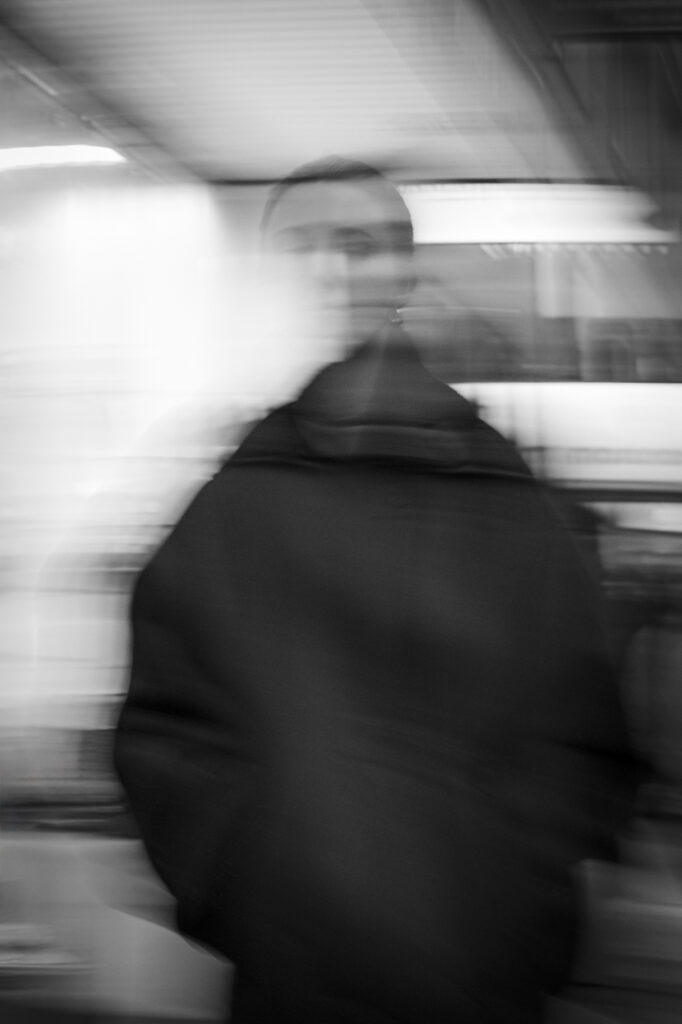
Urban Ghosts – My concept
Urban Ghosts emerged from this process — an exploration of closeness, movement, emotion and the atmosphere of urban spaces. Instead of documenting specific situations, the photographs aim to express a more conceptual interpretation of everyday life in the city.
Over time, this way of working helped transform individual photographs into connected bodies of work, where images relate to each other through shared ideas, moods and visual patterns.
Start with an idea.
Your street photography deserves
more than just moments.
The Role of Ideas in Street Photography
Many photographers spend years searching for a personal style. Often the missing element is not technical skill but conceptual clarity.
Without a clear idea guiding the work, photography easily becomes reactive. The photographer wanders through the city hoping to encounter visually interesting moments. While this approach can lead to strong individual images, it rarely leads to a consistent body of work.
When photography is guided by a concept, several things begin to change:
- The photographer observes the city with clearer intention
- Images start to relate to each other
- Personal themes begin to emerge
- A recognizable visual language develops
Conceptual thinking transforms street photography from a collection of moments into a structured creative process.
Instead of constantly searching for something visually interesting, the photographer gradually develops sensitivity to specific moods, gestures or spatial relationships that connect to the underlying idea.
Over time, this approach helps photographers build a body of work that feels intentional and cohesive.
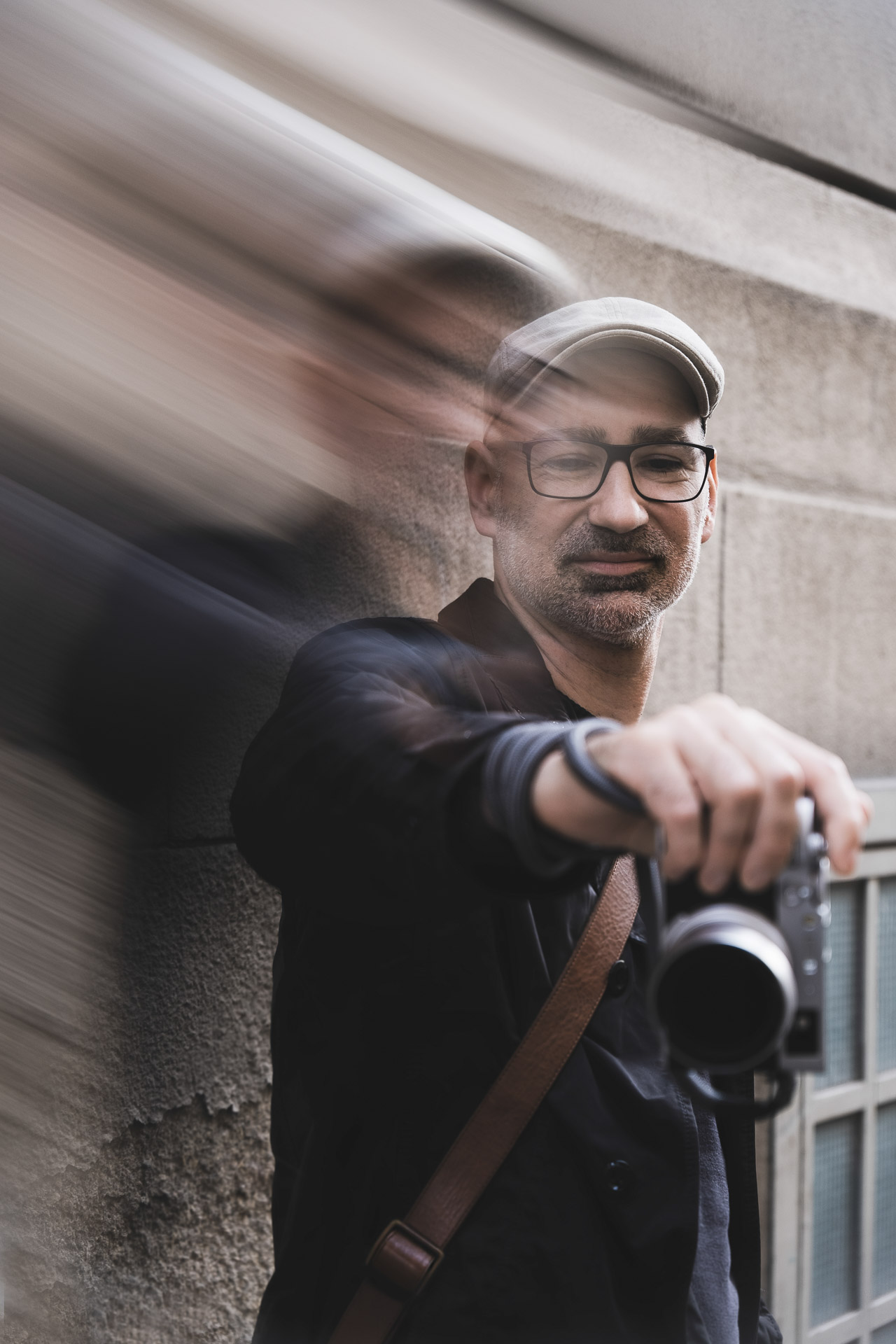
Stefan Czurda – Conceptual Street Photographer
Conceptual Street Photography in Practice
Conceptual street photography does not mean staging scenes or controlling the environment. The city remains unpredictable and dynamic, and chance still plays an important role.
What changes is the photographer’s mindset.
Instead of asking “What interesting moment can I capture?”, the question becomes:
What idea am I exploring through my photography?
This subtle shift influences the way the photographer moves through the city and responds to situations.
Certain moments begin to stand out because they resonate with the underlying concept. The photographer becomes more selective and focused, gradually shaping a visual language that reflects a personal way of seeing.
Conceptual thinking also encourages photographers to return to similar places, atmospheres and visual patterns. Through repetition and observation, themes become clearer and the work begins to develop deeper connections between images.
Urban Ghosts – My conceptual approach
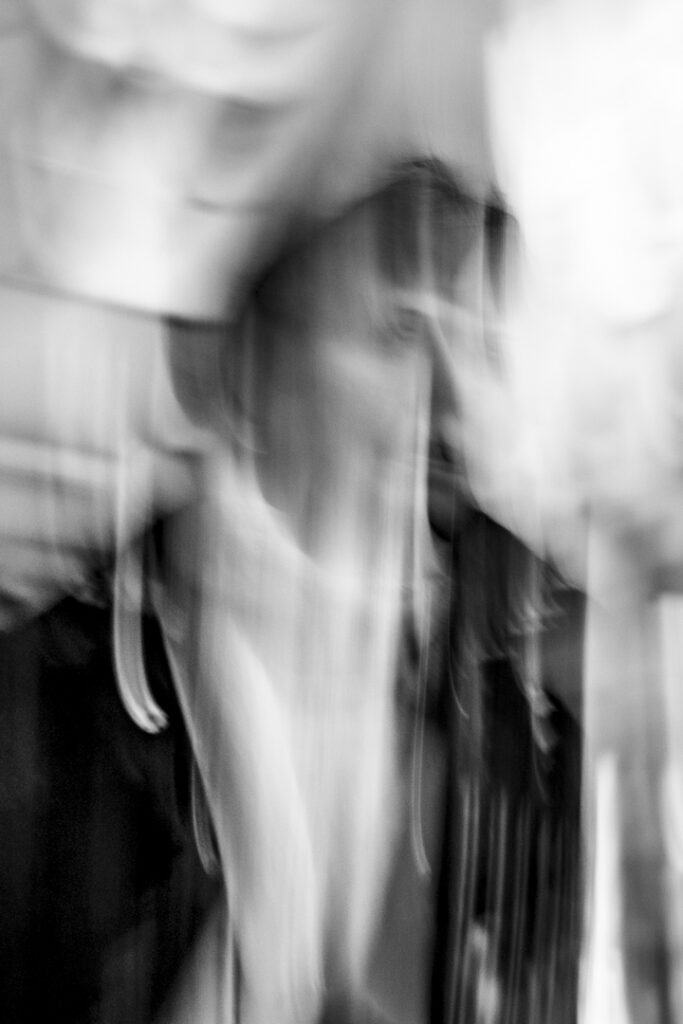
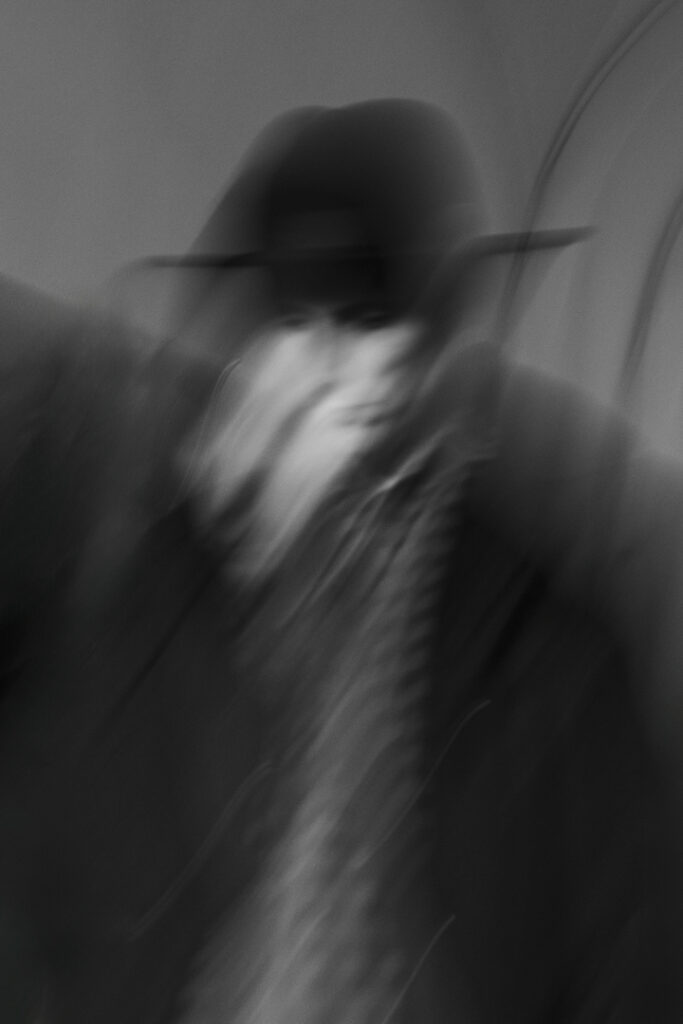
Urban Ghosts – Emotional Fragments
My own work explores this approach through my Urban Ghosts — a body of street photography that uses motion and abstraction to express the emotional atmosphere of modern urban life.
Around 2024, I began using the term Conceptual Street Photography to describe an approach that goes beyond capturing moments, focusing instead on ideas, emotions, and personal perspective.
The photographs are not meant to document specific events or recognizable individuals. Instead, they focus on the fleeting presence of people within the city.
Through motion blur and abstract figures, the images suggest anonymity, movement and emotional distance in urban environments. The figures appear almost ghostlike, reflecting the transient nature of life in the modern city.
Over time, this conceptual exploration led to a coherent visual language that connects individual photographs into a unified project.
From Individual Images to Photographic Series
One of the central ideas behind conceptual street photography is the transition from single photographs to coherent photographic series.
Many photographers create strong individual images but struggle to connect them into a meaningful body of work. Conceptual thinking provides a framework that allows images to relate to each other through recurring visual or emotional themes.
As these connections become stronger, a photographic series begins to emerge. Over time, such series can develop into long-term projects that reflect a deeper artistic vision.
Rather than relying purely on chance encounters, the photographer gradually shapes a consistent visual narrative.
Learn More About Conceptual Street Photography
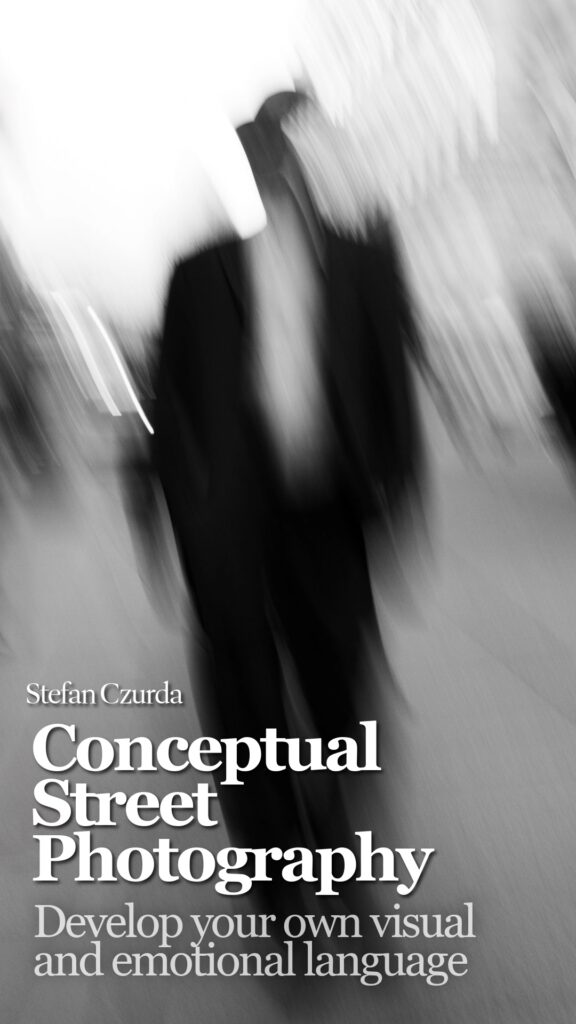
The complete creative framework behind this approach is explained in my book Conceptual Street Photography.
The book explores how photographers can move beyond random moments and develop ideas, visual language and coherent photographic series. It focuses on creative thinking and artistic direction rather than technical settings or camera equipment.
If you want to take your street photography beyond chance and intuition, conceptual thinking can open a new direction in your photographic work.